


In today’s fast-paced and data-driven world, strong analytical intelligence skills are essential for success. Whether you’re making business decisions, interpreting data, or solving complex problems, the ability to think critically and logically sets you apart.
But analytical intelligence isn’t something you’re simply born with—it can be developed and improved over time with the right strategies. In this guide, we’ll explore what analytical intelligence is, why it matters, and how you can strengthen it step by step.
What Is Analytical Intelligence?
Analytical intelligence refers to the ability to analyze information, evaluate ideas, identify patterns, and solve problems using logic and reasoning. It’s one of the core components of intelligence often linked to:
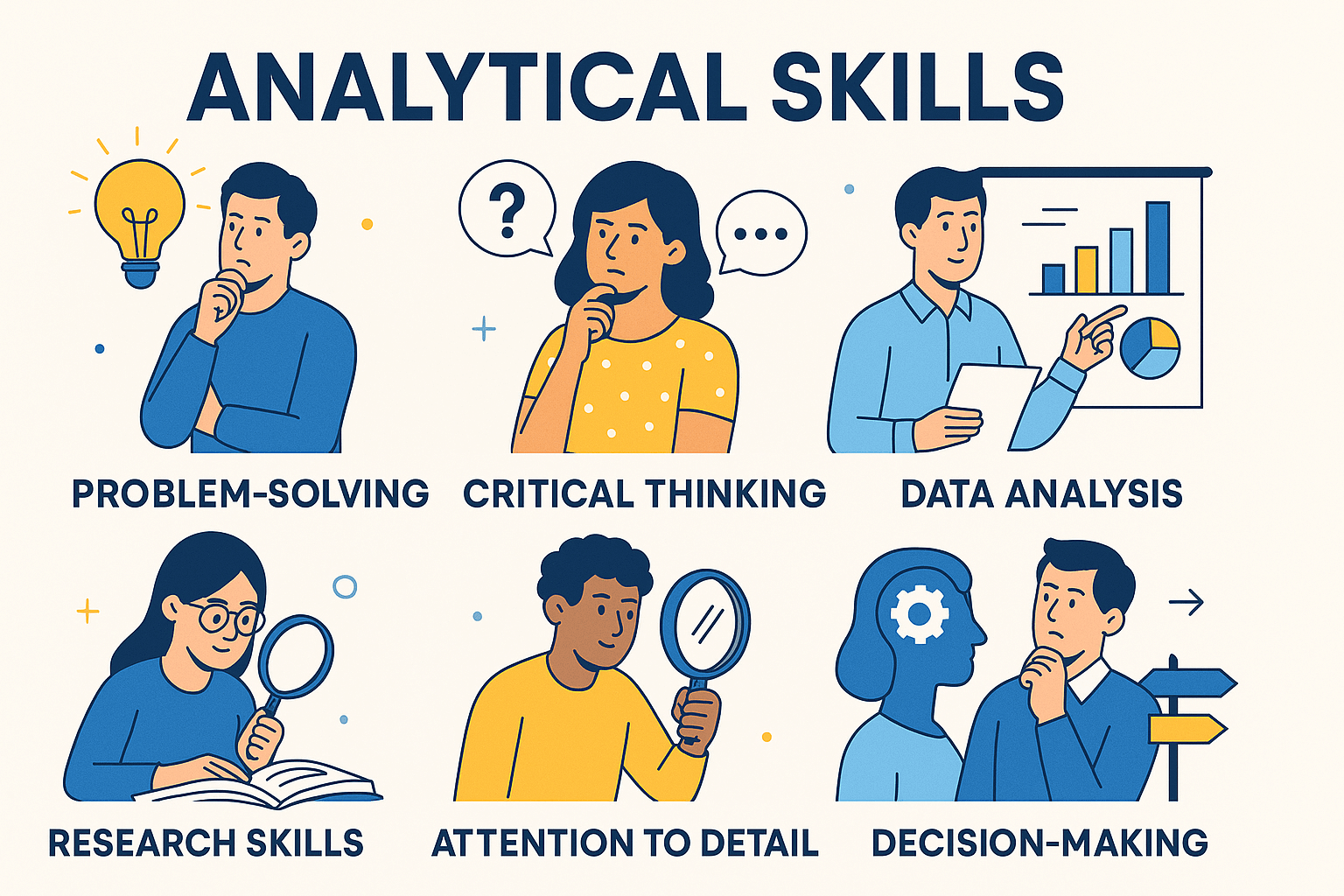
- Problem-solving — breaking down complex challenges into manageable steps.
- Critical thinking — questioning assumptions and evaluating evidence.
- Decision-making — weighing options and choosing the best course of action.
- Logical reasoning — identifying cause-and-effect relationships.
In 2025, as technology, AI, and data become more integrated into everyday life, developing strong analytical intelligence skills is more important than ever.
Why Are Analytical Intelligence Skills Important?
Analytical intelligence plays a key role in both personal and professional life. It helps you:
- Make smarter business and career decisions.
- Analyze data to uncover opportunities or risks.
- Adapt to new situations and challenges with confidence.
- Improve creativity by connecting seemingly unrelated ideas.
- Communicate solutions and strategies effectively.
Employers value analytical thinkers because they bring clarity and direction to complex situations.
How To Develop Your Analytical Intelligence Skills
Building analytical intelligence requires consistent practice and exposure to problem-solving activities. Here are proven strategies you can use:
1. Practice Critical Thinking Daily
Challenge assumptions, ask “why,” and avoid taking information at face value. The more you question and evaluate, the stronger your analytical mindset becomes.
2. Improve Your Problem-Solving Abilities
- Break problems into smaller parts.
- Use frameworks like SWOT analysis or root cause analysis.
- Consider multiple solutions before making a decision.
3. Work With Data Regularly
Analytical intelligence thrives on data interpretation. Practice by:
- Reading charts and graphs.
- Analyzing trends and statistics.
- Learning basic data tools like Excel, Google Analytics, or BI dashboards.
4. Strengthen Logical and Mathematical Thinking
Logic puzzles, strategy games, and even coding exercises can boost your ability to think systematically and improve reasoning skills.
5. Read Widely and Diversely
Expose yourself to different perspectives through books, research papers, and articles. This broadens your knowledge base and enhances critical evaluation.
6. Develop Mind Mapping and Visualization Skills
Creating mind maps, diagrams, or flowcharts helps visualize problems and see connections you might miss otherwise.
7. Engage in Reflective Thinking
After making decisions or solving problems, reflect on the outcome:
- What worked well?
- What could be improved?
- What did you learn for next time?
This feedback loop strengthens future analysis.
8. Use Technology and AI Tools
Modern tools can sharpen your analytical skills by:
- Automating data collection and visualization.
- Running simulations and predictive models.
- Providing insights that you can interpret and evaluate.
Examples of Analytical Intelligence in Action
- A business leader uses market data to decide whether to expand into a new region.
- A student evaluates research sources to build a strong academic paper.
- A manager solves workflow bottlenecks by analyzing productivity metrics.
Each case shows analytical intelligence as a skill applied to real-world decision-making.
Analytical Intelligence vs. Other Types of Intelligence
| Type of Intelligence | Focus | Example |
|---|---|---|
| Analytical | Problem-solving, logic, reasoning | Solving a math problem, data analysis |
| Creative | Innovation, imagination, new ideas | Writing a story, designing solutions |
| Practical | Applying knowledge in real life | Negotiating, fixing real-world issues |
Analytical intelligence often overlaps with creative and practical intelligence, but it specifically emphasizes logic and reasoning.
Best Practices for Strengthening Analytical Intelligence
- Dedicate time each week to puzzles, logic games, or brain training apps.
- Take online courses in data analytics, statistics, or critical thinking.
- Join discussions or debates to practice forming evidence-based arguments.
- Keep a journal to document problem-solving approaches and lessons learned.
- Surround yourself with analytical thinkers—collaboration sharpens skills.
Final Thoughts
Developing analytical intelligence skills is a lifelong process, but the payoff is immense. By practicing critical thinking, engaging with data, and applying structured problem-solving techniques, you’ll sharpen your ability to make better decisions, adapt to challenges, and thrive in an increasingly complex world.
In 2025 and beyond, analytical intelligence will be one of the most valuable skills you can cultivate—for your career, your personal growth, and your ability to navigate change with confidence.